
In my years of research and consultation, I’ve observed a persistent and fascinating misunderstanding about one of nature’s most elegant botanicals: Vitex agnus-castus, commonly known as Chasteberry.
Walk into any health store, and you will find Vitex agnus-castus neatly shelved in the “Women’s Health” aisle. It’s a label that, while commercially convenient, does a profound disservice to the plant’s true mechanism of action—and to the men who could benefit from it.
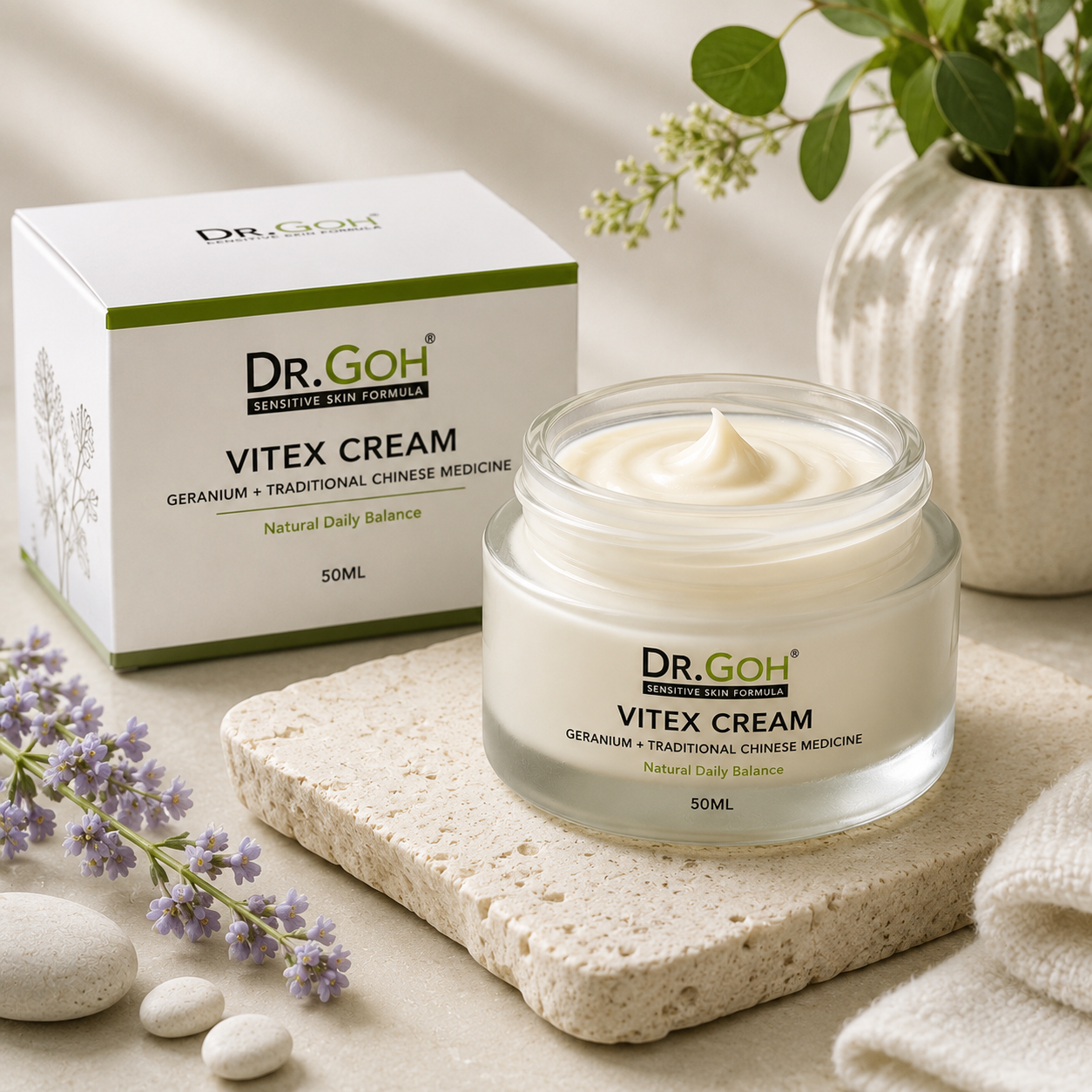
Today, I want to reframe the conversation around our Dr. Goh Restorative Formula Vitex Cream at Doux Visage. This is not a “female hormone” cream. This is a nervous system and pituitary support cream that offers profound benefits for anyone seeking better sleep, a calmer mood, and relief from hormonal related mental discomfort, and even long-term skeletal protection.
The Pituitary: The Great Equalizer
To understand why Vitex works across genders, we must look higher than the ovaries or testes. We must look to the brain specifically, the pituitary gland.
The pituitary is the body’s master conductor. It doesn’t matter if you are 25 or 65, male or female; your pituitary gland is constantly receiving signals from your hypothalamus and sending out instructions to regulate your stress response (cortisol), your sleep quality, and your overall hormonal environment.
Vitex agnus-castus is one of the very few botanicals known to have an affinity for dopamine receptors in this pituitary pathway. By gently supporting healthy dopamine activity, Vitex agnus-castus helps modulate prolactin levels. This is the key.
Why This Matters for Women’s Mood and Sleep
For women, the narrative around Vitex often stops at progesterone and cycle regularity. But the experience of hormonal fluctuation is often one of neurological disturbance—the 3:00 AM waking, the irritability that feels like a short fuse, the anxiety that wasn’t there last week.
When Vitex helps balance the pituitary’s signaling, it eases the nervous tension and
inflammatory pathways that underpin these symptoms. It helps quiet the “noise” in the
system, allowing for:
- Deeper Sleep Architecture: Falling asleep more easily and staying asleep
through restorative Rapid Eye Movement (REM) cycles — the stage of sleep most critical for emotional processing and cognitive restoration. - Stress Modulation: Navigating life’s daily pressures with greater ease and
composure. - Comfort & Longevity: Natural relief from hormone-related discomfort, paired with supportive care for long-term skeletal health.
A Note for Men: You Are Not Exempt
This is the part of the conversation that is often left out, so I want to be very clear.
Men have pituitary glands. Men have prolactin. And men suffer profoundly from stress-induced hormonal disruption.
In the male physiology, chronically elevated stress and prolactin levels are silent saboteurs. They are linked to:
- Restless Nights: The “tired but wired” phenomenon where the mind refuses
to switch off. - Mood Instability: Heightened irritability, low motivation, and emotional flatness.
- Energy Dysregulation: A feeling of running on empty even after a full night’s rest.
Because Dr. Goh Restorative Formula Vitex Cream works at the level of the pituitary— supporting the body’s innate ability to self-regulate dopamine and prolactin—it is an incredibly supportive, non-sedating tool for men. It does not introduce external testosterone or estrogen. It simply helps the brain’s command center do its job more effectively.
Men using Dr. Goh Restorative Formula Vitex Cream at Doux Visage report a gradual return to emotional equilibrium and a noticeable improvement in sleep continuity. They wake up feeling restored, not drained.
A Gentle, Transdermal Approach
At Doux Visage, we have created a transdermal cream format for a reason. The skin is a remarkable organ of absorption. Applying Dr. Goh Restorative Formula Vitex Cream topically allows for a slow, steady interaction with the system, bypassing the digestive tract and providing a gentle, daily touchpoint for self-care.
Whether you are a woman navigating the ebb and flow of monthly cycles, or a man navigating the relentless demands of a high-stress career, the goal is the same: Inner Calm.
Dr. Goh Restorative Formula Vitex Cream is not about forcing the body into a new shape. It is about whispering to the brain’s conductor, asking for a slower, more harmonious tempo.
With you in wellness,
Dr. Goh, PhD
Founder of DOUX VISAGE
Chief TCM Medical Practitioner
Wellness and Beauty Consultant